
Finding Designer Brands at The Bin Store: Real Luxury for SC Bargain Hunters
March 13, 2026
The Bin Store Black Friday Every Week: Why SC Families Are Ditching Traditional Retail
March 15, 2026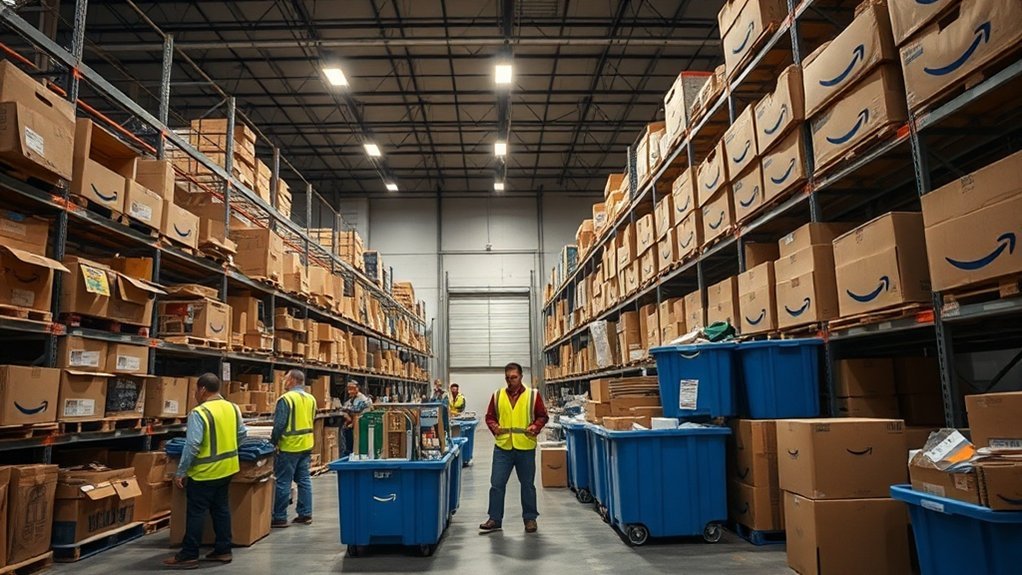
South Carolina bin store owners win their Amazon return treasure through weekly online liquidation auctions! They’re bidding on massive mystery pallets that cost $400-$1,200 and contain 200-500 returned items each. Here’s the exciting part: successful stores buy 5-10 pallets every single week to keep shelves packed with fresh finds. Within just 48 hours of winning an auction, they’ve unloaded, sorted, priced, and stocked everything for enthusiastic shoppers. The specific strategies they use to score profitable pallets reveal exactly how this entire system works.
Key Takeaways
- Bin stores purchase Amazon return pallets directly from liquidation auctions, typically costing $400-$1,200 per pallet with 200-400 items.
- Owners bid strategically on pallets through online liquidation sites, using manifests and photos to assess potential resale value.
- After winning auctions, stores complete a 48-hour turnaround: unloading, sorting, pricing, and stocking merchandise on shelves.
- Most stores refresh inventory weekly, with some restocking twice weekly during peak seasons to maintain customer interest.
- Successful operations purchase 5-10 pallets weekly, ensuring fresh, diverse inventory that keeps customers returning for new deals.
How South Carolina Bin Stores Buy Amazon Return Pallets
When you walk into a South Carolina bin store, you’re seeing the end result of a fascinating supply chain. But where does it all begin? Let’s pull back the curtain together.
The Pallet Sourcing Process****
Bin store owners purchase return pallets directly from Amazon liquidation auctions. These pallets typically cost between $400-$1,200 each. Each contains 200-400 returned items!
What Makes It Work
Smart inventory management separates successful stores from struggling ones. Owners bid on “mystery” pallets without knowing exact contents. It’s like buying a treasure chest with no map. Some pallets deliver gold (electronics, kitchen gadgets). Others? Not so much. Understanding liquidation pallets can help resellers identify valuable items with high profit potential.
We’re talking serious volume here. Top stores buy 5-10 pallets weekly to keep bins constantly refreshed with new finds for shoppers like you.
How the Liquidation Auction Bidding Process Works
So how do bin store owners actually score these pallets at auction?
It’s not just clicking “buy now” and calling it a day! We’re talking real liquidation strategies that separate successful stores from broke ones.
The auction process works like this:
You browse available pallets online through liquidation sites. Each listing shows photos and manifests of what’s inside. Then the bidding war begins!
Smart owners use specific auction tactics to win without overpaying. They set strict budgets based on resale value. For example, a pallet manifested at $5,000 retail might start bidding at $500.
The key? Know your maximum bid beforehand. Don’t get caught up in the moment and blow your entire budget on one pallet.
Set your max bid before the auction starts and stick to it no matter what happens.
We research what sells in our local market first. That intel makes all the difference between profit and loss.
What Bin Stores Actually Pay for Amazon Return Pallets
How much do bin store owners actually shell out for these mystery pallets? We’re talking real money here. Pallet prices typically range from $400 to $3,000 per load depending on the category and condition grade. Electronics pallets cost way more than clothing or home goods. Most South Carolina bin stores target the $800-$1,200 sweet spot for peak profit margins.
Here’s where it gets interesting! A single pallet contains 200-500 individual items on average. You do the math on that per-item cost. It’s pennies on the dollar compared to retail.
Smart bin store owners calculate their profit margins carefully. They need to cover the pallet cost, rent, and staff while still pricing items to move fast. The goal? Triple your investment minimum. Additionally, sourcing liquidation pallets effectively allows for diverse inventory acquisition, maximizing potential profits.
From Auction Win to Store Shelves: The 48-Hour Turnaround
Once that auction hammer drops, bin store owners race against the clock like contestants on a game show. We’re talking serious turnaround efficiency here! Most South Carolina bin stores follow a tight 48-hour schedule to get merchandise from dock to display.
Here’s how we tackle inventory management in record time:
- Day 1: Unload pallets, sort items by category, and price everything
- Day 2: Stock bins, organize displays, and prep the store floor
- Hour 48: Doors open for enthusiastic treasure hunters!
This lightning-fast process keeps costs down and excitement high. You can’t let returns sit in a warehouse collecting dust. Smart owners know that fresh inventory equals happy customers who keep coming back. We move fast because our community expects new finds constantly!
How Often South Carolina Bins Get Fresh Amazon Return Inventory
Most South Carolina bin stores refresh their inventory weekly, though some high-volume locations restock twice per week during peak seasons. You’ll want to check your local store’s schedule because timing makes all the difference!
Peak inventory rotation happens:
- Wednesday mornings (most common)
- Friday afternoons (weekend shoppers)
- Monday evenings (fresh week starts)
We’ve seen stores receive 500-1,200 items per shipment. That’s serious product sourcing power! The bins get completely emptied and refilled like clockwork.
Here’s the insider tip: call ahead and ask when trucks arrive. Some locations post their restock days on Facebook or Instagram.
Smart shoppers mark their calendars and show up right when doors open. Fresh inventory means first pick of the treasure! Additionally, the regular restock days at Bin Store Columbia help maintain a diverse selection for customers.
Frequently Asked Questions
Can Individual Customers Buy Directly From Liquidation Auctions Instead of Bin Stores?
Yes, you can buy directly from liquidation auctions! We’re all chasing the same retail opportunities that bin stores access. Platforms like Liquidation.com and B-Stock let you bid on Amazon return pallets starting around $100-$500. Here’s the catch: you’ll need to buy full pallets or truckloads. Most auctions require minimum purchases of 10-20 pallets at $2,000-$5,000 total. It’s like wholesale treasure hunting, but you’ll need storage space and sorting time!
What Happens to Items That Don’t Sell at the Bin Store?
Unsold inventory doesn’t just disappear from bin stores. Most items go back into the liquidation process! Here’s what typically happens:
The cycle continues:
- Bin stores bundle leftovers into larger pallets
- They sell these mixed lots to other liquidators at rock-bottom prices
- Some donate remaining items to charities for tax write-offs
Items might get sold for just $0.10 per pound. It’s wild how these Amazon returns keep circulating until someone finally takes them home!
Are Bin Store Owners Allowed to Keep Items for Personal Use?
Think of it like working at a candy store—you can’t just eat the inventory!
The ethics of ownership get tricky here. Most bin store contracts specifically prohibit owners from cherry-picking items. You’re running a business, not your personal shopping mall.
Personal use policies vary by liquidation company. Some allow keeping damaged items that can’t be sold. Others say absolutely everything hits those bins. Breaking these rules? That’s how we lose our supplier relationships fast.
Do Bin Stores Sort Items Before Pricing or Sell Everything Mixed Together?
Most bin stores skip detailed sorting processes and dump everything together! That’s actually part of the fun we all love. The pricing strategies stay super simple: everything costs the same price each day regardless of value. You’ll find a $5 toaster next to a $50 speaker on Wednesday when items are $3 each. Thursday drops to $2, then Friday hits $1. We dig through mixed bins hunting for hidden gems! Some owners separate electronics from clothes into different bins. However, they don’t individually price anything.
What Percentage of Amazon Return Items Are Actually Defective or Damaged?
You’ll be surprised to learn that returns percentages show only 5-10% of items are actually defective! Most returns happen because customers changed their minds or ordered the wrong size. We’re talking about perfectly good stuff getting resold.
Here’s what makes up those defective items:
- Broken electronics (less than 3%)
- Damaged packaging (around 4%)
- Missing parts (roughly 2%)
The rest? They’re treasure waiting for you to discover!
Conclusion
You’ve seen how we get those pallets. The bidding wars at 2am. The $400 gambles that could hold $4,000 worth of stuff!
Now it’s your turn to dig through the bins. Fresh inventory hits our South Carolina and Georgia locations every 48 hours. Saturday’s $10 items drop to $1 by Friday.
Will you find AirPods or air fresheners? That’s the thrill we’re all chasing together.
Visit us at The Bin Store Columbia (2814 Augusta Road, West Columbia, SC 29170 – 803-728-5699) or The Bin Store Grovetown (862 Horizon South Parkway, Grovetown, GA 30813 – 803-507-5982). With 800,000 to 1,000,000 products sold per store annually, we’re one of the pioneers bringing you unbeatable deals on Amazon returns.
Find locations and hours at https://shopbinstores.com/
Follow us on social media:
Facebook: https://www.facebook.com/TheBinStores & https://www.facebook.com/binstorecolumbia
TikTok: https://www.tiktok.com/@shopbinstores
Instagram: https://www.instagram.com/shopbinstores/ & https://www.instagram.com/binstorecolumbia
YouTube: https://www.youtube.com/@thebinstore
Twitter: https://twitter.com/ShopBinStores
LinkedIn: https://www.linkedin.com/company/the-bin-store/
Watch the action: https://youtube.com/shorts/6q4KQdxvvQA

