Flea Market Sales Mastery Reselling Liquidation Merchandise
May 27, 2024Exporting Liquidation Merchandise From Texas To Mexico Regulations And Tips
May 27, 2024Are you seeking a new business venture in the state of Texas? If so, starting a liquidation resale business may be a lucrative option worth considering. Liquidation pallets present a profitable opportunity for individuals interested in entering the realm of merchandise reselling.
This guide is designed to assist you in establishing a successful liquidation resale business in Texas. It covers various aspects, including comprehending the diverse types of liquidation inventory and optimizing profitability.
Explore further insights on purchasing liquidation pallets, enhancing profits, and acquiring inventory within the Lone Star State.
Key Takeaways:

Understanding Liquidation Pallets
A comprehensive understanding of liquidation pallets is crucial for businesses engaged in wholesale practices, involving the procurement of customer returns, shelf-pulled items, and overstock merchandise in large quantities. This customary procedure is prevalent not only in Texas but also throughout the United States, providing business proprietors with the opportunity to resell these items to buyers at a profit.
Liquidation pallets encompass a wide array of products, ranging from electronics and apparel to household items and toys, rendering them a diversified investment. While engaging with liquidated inventory presents its own set of risks, such as the potential receipt of damaged or unsalable goods, one of the primary advantages of diving into the liquidation market lies in the ability to acquire items at considerably reduced prices compared to traditional wholesale channels.
Businesses operating within this industry encounter fierce competition, as all participants strive to secure the most valuable items for subsequent resale.
Customer Returns
Managing customer returns is a common practice within the liquidation industry, where enterprises acquire returned goods from retailers, assess their quality, and subsequently resell them in pallets or truckloads. While this process presents inherent risks, such as damaged or unsalable items, it can prove to be a lucrative endeavor for those involved in wholesale commerce.
A key challenge associated with addressing customer returns within the realm of liquidation sales pertains to the potential impact on profit margins. Businesses are tasked with diligently evaluating the state of returned items to ascertain their suitability for resale at a competitive price point. This necessitates a delicate balance between the expenses incurred for inspection and refurbishment and the anticipated resale value. Upholding stringent quality control protocols is imperative to ensure that only viable merchandise is reintroduced into circulation, thus safeguarding the integrity of the business and enhancing customer satisfaction.
Overstock
The liquidation business involves the handling of excess inventory, which consists of surplus goods that retailers have not been able to sell and are acquired at discounted prices for resale. Overstock items encompass a diverse array of products, ranging from electronics to clothing, creating opportunities for wholesalers to procure merchandise for resale.
The surplus inventory may arise from various factors, including shifting consumer preferences, seasonal variations, or production excesses. Effectively managing overstock items is paramount for retailers to preserve cash flow and liberate valuable shelf space.
Liquidation sales present a strategic solution for efficiently clearing excess inventory. Through the implementation of targeted marketing initiatives and discount strategies, wholesalers can attract customers seeking discounted offerings. A proper merchandising approach and effective showcasing of overstock items can elevate their appeal and expedite sales, thereby ensuring a favorable outcome for the business.
Starting a Liquidation Resale Business in Texas
Establishing a liquidation resale business in Texas demands meticulous planning and precise execution to thrive in this fiercely competitive market. Entrepreneurs must formulate a comprehensive business plan, secure adequate financing, complete business registration procedures, and establish partnerships with dependable suppliers for acquiring liquidation inventory.
Following the establishment of a robust business plan, prospective business proprietors should concentrate on effective budgeting strategies. It is imperative to devise a realistic budget that encompasses initial investments, operational expenses, and potential revenue fluctuations. Subsequently, once the financial framework is in place, the subsequent phase involves adeptly navigating the legal stipulations unique to Texas. Adhering to state regulations, encompassing the selection of a suitable business structure, acquisition of requisite permits and licenses, is paramount. Acquiring tax permits and comprehending sales tax regulations significantly contribute to the seamless operation of a liquidation resale enterprise.
Step 1. Create a business plan and budget
The initial step in establishing a liquidation resale business in Texas involves the development of a comprehensive business plan that delineates market research, target demographics, financial forecasts, and a long-term growth strategy. This strategic document will function as a guiding framework for the business operations and facilitate the procurement of financial backing from potential investors or financial institutions.
An intricately structured business plan holds a pivotal role in delineating clear objectives and outlining the precise actions necessary to accomplish them. It serves as a tool to evaluate the viability of the business concept, identify foreseeable obstacles, and cultivate strategic approaches to surmount them. Moreover, integrating detailed financial projections into the plan is essential to gaining a realistic comprehension of the financial prerequisites associated with operating a liquidation resale enterprise. This proactive insight give the power tos entrepreneurs to make informed decisions, allocate resources judiciously, and respond adeptly to evolving market dynamics.
Step 2. Register your business

Upon completion of a business plan, the subsequent imperative is to formally register the liquidation resale business with the appropriate governing bodies in Texas. This encompasses the acquisition of requisite permits and licenses to legally conduct operations within the state and ensure adherence to all regulatory frameworks.
Initiating the registration process necessitates the initial selection of a business structure for the liquidation resale enterprise. Common alternatives comprise sole proprietorship, partnership, corporation, or limited liability company (LLC). Subsequently, after finalizing the chosen structure, it is imperative to register the business entity with the Texas Secretary of State and secure an Employer Identification Number (EIN) from the Internal Revenue Service. Additionally, the procurement of any specific permits or licenses mandated for the distinct nature of the resale business, such as a Sales Tax Permit issued by the Texas Comptroller of Public Accounts, is essential.
Step 3: Apply for a Texas Sales Tax Permit
Acquiring a Texas Sales Tax Permit is imperative for your liquidation resale business to adhere to state tax regulations. This permit authorizes you to levy and remit sales tax on the goods you distribute within Texas.
It is noteworthy that the procedure for procuring a Texas Sales Tax Permit entails completion of an application form furnished by the Texas Comptroller’s Office and its submission alongside any requisite documentation. Upon authorization, your business will receive a unique permit number that must be conspicuously displayed on invoices and receipts. Neglecting to secure this permit and collect sales tax can lead to penalties and fines.
Ensuring tax compliance not only mitigates legal ramifications but also cultivates trust with clientele and bolsters your standing in the market.
Step 4: Secure storage for inventory
It is imperative to have sufficient storage space for liquidation inventory to uphold organization and efficiency in the resale business. It is advisable to contemplate renting a warehouse or storage facility in Texas to accommodate pallets and truckloads of merchandise.
When choosing a storage facility for the resale business, it is essential to ensure that it provides climate control to safeguard inventory from extreme temperatures and humidity. The facility’s location should be carefully considered in relation to suppliers and customers to facilitate convenient logistics. The implementation of shelving units and inventory tracking systems can enhance space utilization and inventory management. Prioritizing security measures such as CCTV cameras and access controls is crucial to protect assets. By thoughtfully evaluating these aspects, a well-structured storage solution can be established to bolster the success of the liquidation business.
Step 5: Find reliable liquidation inventory suppliers
It is imperative for the success of any business to identify reputable and trustworthy liquidation inventory suppliers. This can be achieved through thorough research, participation in liquidation auctions or trade shows, and the cultivation of relationships with dependable suppliers to ensure a consistent supply of high-quality merchandise.
Maintaining a stringent standard of quality control is essential when dealing with liquidation inventory. Establishing a strong rapport with suppliers can facilitate the acquisition of premium goods while minimizing the risk of substandard products that could potentially damage the business’s reputation.
Regular and effective communication with suppliers is key to staying abreast of available inventory, upcoming auctions, and potential business opportunities. Demonstrating loyalty and professionalism can position a business as a valuable partner in the eyes of suppliers, potentially leading to favorable pricing and preferential access to highly sought-after items.
Step 6: Receive and catalog inventory
Upon reception of the liquidation inventory, it is imperative to meticulously catalog and systematize the items. Establishing a methodical inventory management procedure is crucial in enabling the effective tracking, labeling, and monitoring of merchandise before its preparation for resale.
Integrating barcode scanning technology can enhance the efficiency of the cataloging process, mitigating the occurrence of manual errors and augmenting inventory precision.
Employing specialized inventory management software facilitates the categorization of items, formulation of pricing strategies, and tracking of sales performance.
It is advisable to prioritize the organization of inventory based on factors such as product type, condition, or sales velocity to optimize storage capacity and retrieval efficiency.
Conducting periodic inventory audits is recommended to pinpoint obsolete stock and implement clearance or discount strategies to prevent inventory accumulation.
Step 7: Sell inventory through local channels
Marketing and selling liquidation inventory through local channels can be advantageous in expanding the reach of potential buyers and optimizing resale opportunities. One should consider establishing booths at local flea markets, forming partnerships with nearby retailers, or utilizing online platforms for the promotion and sale of merchandise.
Participating in local community events such as fairs, craft shows, and pop-up markets can also prove to be effective methods for showcasing inventory and engaging with prospective customers. By engaging with these local events, a personal touch can be added to the sales strategy, fostering relationships with clients who value supporting local enterprises.
In addition, leveraging social media platforms like Facebook Marketplace, Nextdoor, or Letgo can broaden the outreach beyond physical locations, connecting the seller with customers in the immediate vicinity who are actively seeking deals on high-quality goods.
Buying Liquidation Pallets in Texas

The acquisition of liquidation pallets in Texas presents businesses with the opportunity to procure bulk inventory at discounted rates for the purpose of resale. Offering a varied assortment of products that include customer returns, shelf-pulled items, and overstock merchandise, the procurement of liquidation pallets can prove to be a financially rewarding endeavor for potential buyers.
When deliberating on which pallets to acquire, it is imperative to conduct a thorough evaluation of the goods’ condition, examine the manifest furnished by the liquidation company, and ascertain the potential resale value of the items. By engaging in bulk purchases, businesses can capitalize on enhanced profit margins resulting from the decreased cost per unit. The acquisition of liquidation pallets enables businesses to diversify their inventory and gain access to a broad array of products capable of accommodating varied customer preferences.
Given the appropriate strategic approach and a comprehensive understanding of the market landscape, businesses operating in Texas can harness the lucrative prospects associated with the procurement of liquidation pallets.
Benefits of Buying Liquidation Pallets
The acquisition of liquidation pallets in Texas presents numerous advantages for businesses, such as gaining access to a broad assortment of goods at reduced rates, the potential to generate profits through product resale, and the capacity to broaden inventory procurement channels. The procurement of liquidation pallets allows buyers to realize cost savings and expand their product offerings.
Procuring liquidation inventory permits businesses to access a spectrum of products that may not be readily accessible through conventional sourcing avenues. This diversification not only maintains the inventory’s novelty and appeal to customers but also introduces fresh revenue streams. The purchase of liquidation pallets can result in augmented profit margins owing to the lower initial investment compared to the purchase of new goods, thereby facilitating the implementation of more competitive pricing strategies or increased profit margins during the product sale process.
Direct Liquidation Options
Direct Liquidation offers buyers in Texas a convenient platform through which they can acquire liquidation inventory directly from retailers and manufacturers. This avenue provides access to a broad array of products, competitive pricing, and efficient purchasing procedures for businesses seeking quality merchandise for resale.
The convenience of utilizing Direct Liquidation allows buyers in Texas to access a diverse inventory selection without the need to physically visit multiple locations. The extensive range of available products ensures that businesses have the flexibility to select items that align with their requirements and target markets. With competitive pricing that can lead to substantial cost savings, this platform give the power tos businesses to optimize their profits and maintain competitiveness within the industry.
Direct Liquidation serves as a valuable asset for Texas-based businesses seeking effective and economical methods to procure liquidation stock.
Maximizing Profits from Liquidation Pallets
The optimization of profits from liquidation pallets entails a meticulous approach encompassing strategic planning, effective marketing tactics, and efficient inventory management. For businesses operating in Texas, the enhancement of resale earnings can be achieved through the strategic implementation of pricing optimization strategies, the diversification of sales channels, and the maintenance of rigorous quality standards in their liquidation inventory.
Vigilant monitoring of market trends and consumer preferences enables companies to tailor their pricing strategies adeptly, striking a delicate balance between competitiveness and profitability in the liquidation product segment. The adoption of targeted marketing methodologies, such as harnessing the potential of social media platforms and forging partnerships with influential figures, can significantly amplify the outreach of businesses, thereby augmenting sales figures. Concurrently, the enforcement of stringent quality control protocols, inclusive of comprehensive product assessments and the provision of precise product descriptions, assumes a pivotal role in elevating customer contentment levels and establishing a distinguished brand presence within the fiercely contested liquidation marketplace.
Selling Merchandise from Home
Engaging in home-based merchandise sales presents a convenient and cost-effective avenue for businesses in the state of Texas to expand their reach and drive sales. Through the strategic utilization of online platforms, social media channels, and e-commerce tools, entrepreneurs can effectively exhibit their liquidation inventory and attract clientele without the necessity of a physical retail establishment.
This method not only diminishes the operational expenses tied to upkeeping a traditional brick-and-mortar outlet but also facilitates access to a broader, global market. By availing themselves of the opportunity to list products on diverse online marketplaces like Amazon, eBay, or Etsy, sellers can connect with a diverse spectrum of potential customers beyond their immediate geographical vicinity. The implementation of precisely targeted digital marketing initiatives serves to bolster visibility and engagement, ensuring that the merchandise garners optimal exposure to interested buyers.
Selling Merchandise Online
The act of selling merchandise online serves as a prevalent strategy for businesses in Texas seeking to broaden their customer base and extend their outreach to a more expansive audience. Through the utilization of e-commerce platforms, social media marketing tactics, and online advertising campaigns, entrepreneurs can effectively exhibit their liquidation inventory, allure potential buyers, and facilitate sales through digital avenues.
Online sales present a distinctive scalability benefit to businesses, enabling them to readily adjust their inventory levels and access a global market without necessitating substantial physical expansion. By online platforms, Texas-based enterprises can harness the power of data analytics to discern consumer behavior patterns and customize their marketing approaches to enhance customer engagement.
This tailored methodology aids in the cultivation of enduring relationships with clientele, fostering loyalty, and prompting recurrent purchases. The digital realm offers a myriad of marketing prospects that can fortify businesses’ positions in the fiercely competitive e-commerce sector.
Sourcing Liquidation Pallets in Texas
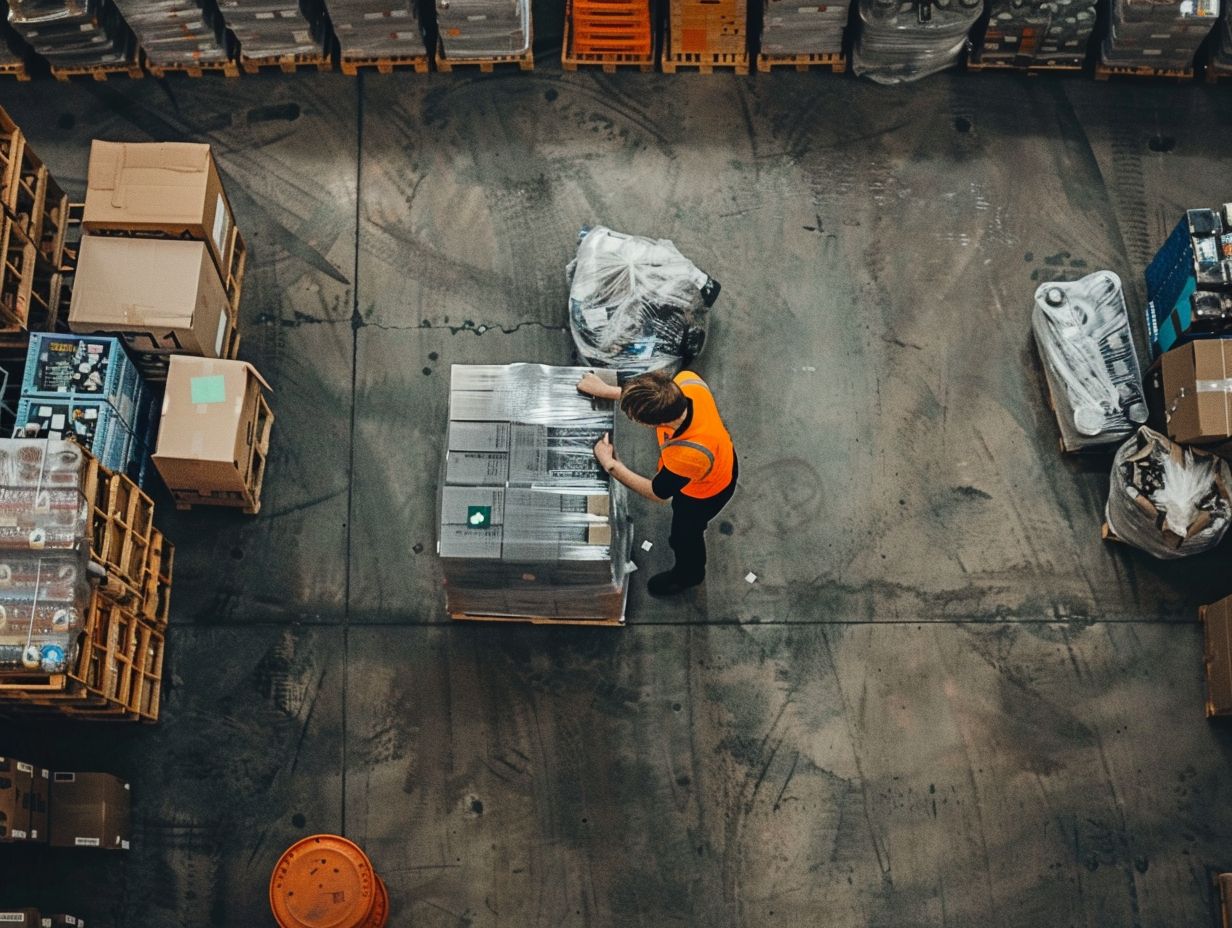
Acquiring liquidation pallets in Texas necessitates that businesses cultivate robust relationships with reputable suppliers, partake in auctions or trade exhibitions, and capitalize on digital platforms for inventory procurement. By broadening their procurement channels and meticulously conducting due diligence, entrepreneurs can secure high-quality merchandise for subsequent resale.
The establishment of a dependable supplier network holds paramount importance within the domain of pallet procurement. These affiliations can furnish privileged access to exclusive deals and the premier selection of valuable merchandise. Engagement in industry events such as auctions and trade shows enables businesses to remain abreast of market dynamics and forge connections with potential suppliers. Online platforms offer expediency and an extensive array of pallet inventory choices, simplifying the process for businesses to identify the optimal products for resale.
Direct Liquidation Resources
Direct Liquidation offers a range of valuable resources tailored for businesses in Texas seeking to procure liquidation inventory. These resources include access to detailed product catalogs, auction listings, and buyer guides. By leveraging these resources, entrepreneurs can make well-informed purchasing decisions and acquire high-quality merchandise for resale purposes.
The product catalogs supplied by Direct Liquidation furnish businesses in Texas with a comprehensive overview of the available inventory, enabling them to efficiently peruse various categories and select items that align with their specific requirements. Furthermore, the auction listings present opportunities for competitive pricing and swift merchandise turnover. Simultaneously, the buyer guides provide essential insights and strategies for navigating the liquidation market adeptly. These resources give the power to entrepreneurs to maintain competitiveness and capitalize on lucrative prospects within the liquidation industry.
Frequently Asked Questions
What are liquidation pallets and how can they be a home business opportunity in Texas?
Liquidation pallets are bulk quantities of products that are sold at a significantly discounted price due to being overstocked or returned by retailers. These pallets can be purchased and resold for profit, making them a popular home business opportunity in Texas.
Where can I find liquidation pallets to start my home business in Texas?
There are various online retailers and wholesalers, such as Zapps Wholesale, that specialize in selling liquidation pallets. These companies often have warehouses located in Texas, making it convenient for buyers to access the pallets.
What types of products can I expect to find in liquidation pallets?
Liquidation pallets can contain a wide variety of products, including clothing, electronics, home goods, toys, and more. The specific products in each pallet may vary, but they are generally from well-known brands and in good condition.
Are there any risks associated with buying and reselling liquidation pallets?
As with any business venture, there are risks involved. It is important to do your research and carefully inspect the products in the pallets before purchasing to ensure they are in sellable condition. Additionally, there may be competition in the market, so it is important to price your products competitively.
Can I make a full-time income from reselling liquidation pallets from my home in Texas?
Many people have successfully turned reselling liquidation pallets into a full-time income. However, it takes time, effort, and a solid business strategy to make a significant profit. It is important to consider your goals and resources before diving into this opportunity.
Are there any legal requirements for starting a liquidation pallet home business in Texas?
It is important to check with your local and state regulations to ensure you are complying with any necessary permits or licenses. Additionally, you may need to report your income and pay taxes on your profits. Consulting with a legal or financial professional can help you understand and meet these requirements.


